
Better Aim Beats a Bigger Budget
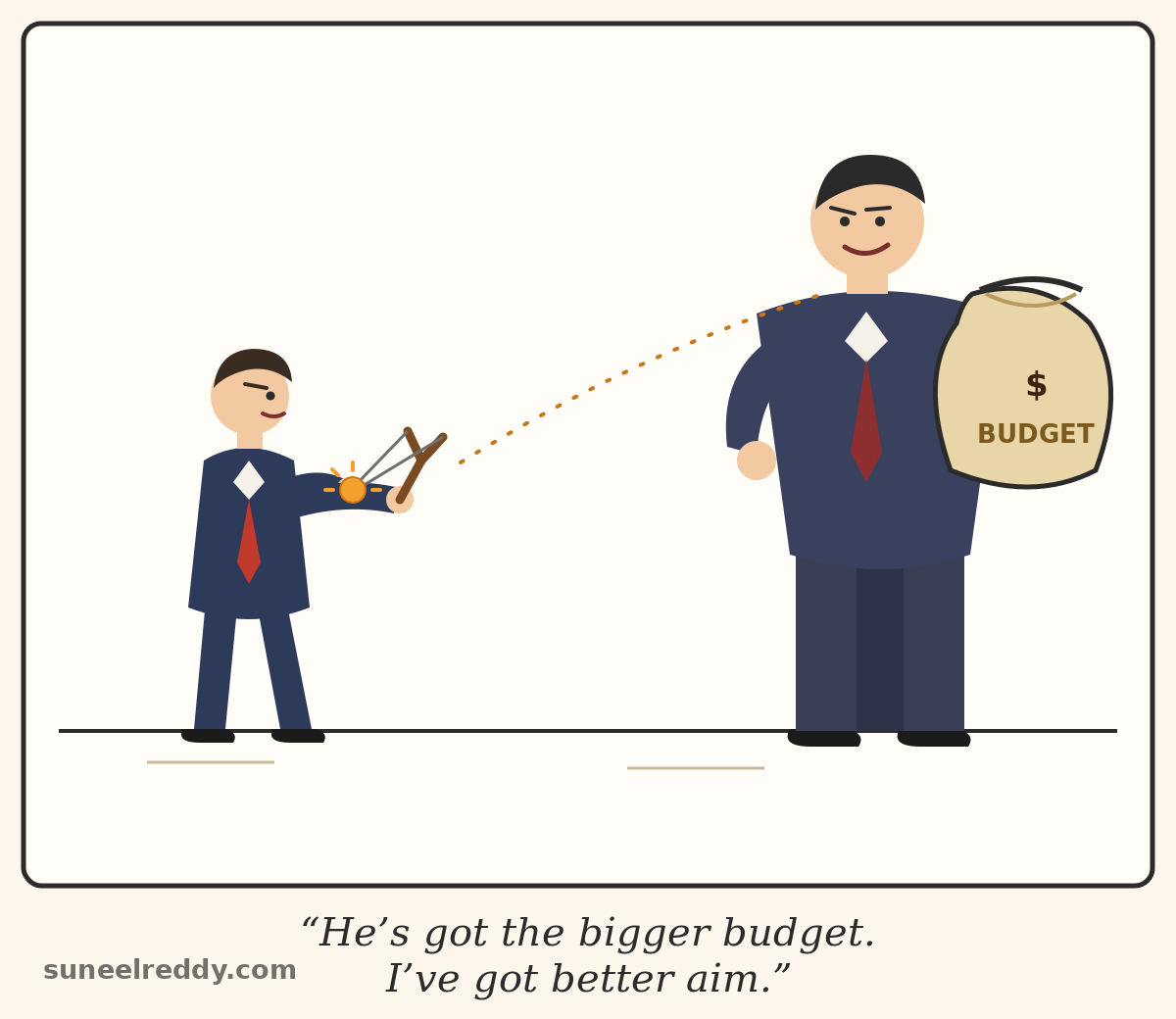
In a crowded market, the biggest budget usually wins. Usually — not always. And the exceptions are worth studying.
I co-founded a premium pet brand in one of the most crowded categories there is, against competitors with far deeper pockets. We couldn't outspend anyone. So we had to learn to out-think them — and that constraint turned out to be the advantage.
A few things being the underfunded player teaches you that a big budget hides:
1. A big budget lets you skip the hard question. A small one doesn't. When you can buy attention, you never have to find out whether anyone actually wants the product. When you can't, you're forced to earn every single customer — which means you learn what truly resonates far faster than a well-funded competitor ever will.
2. Focus is the underdog's only real weapon. A large player has to be everything to everyone. You don't. You can own one sharp position — one customer, one promise, one thing you do better than anyone — and dominate the narrow ground the giants find too small to defend.
3. Trust scales cheaper than reach. You can't buy your way to the top of the category. But a hundred customers who genuinely trust you will each bring three more. Word of mouth has no media budget — and in a skeptical, crowded market, it's the only channel competitors can't simply outbid you for.
The mistake underdogs make is trying to fight the giant's war — more spend, more reach, more noise — on a fraction of the budget. You lose that war by definition. You win a different one: sharper aim, narrower focus, deeper trust.
Limited resources aren't only a disadvantage. They're a forcing function that makes you find out, early, whether you actually have something worth buying.
If you've built something in a crowded market — what was the one scrappy move that worked far better than its price tag suggested?
(Aim, it turns out, beats budget more often than the budget-holders would like.)