
Take Out Oil and Gold, and India’s Trade Deficit Is a China Deficit
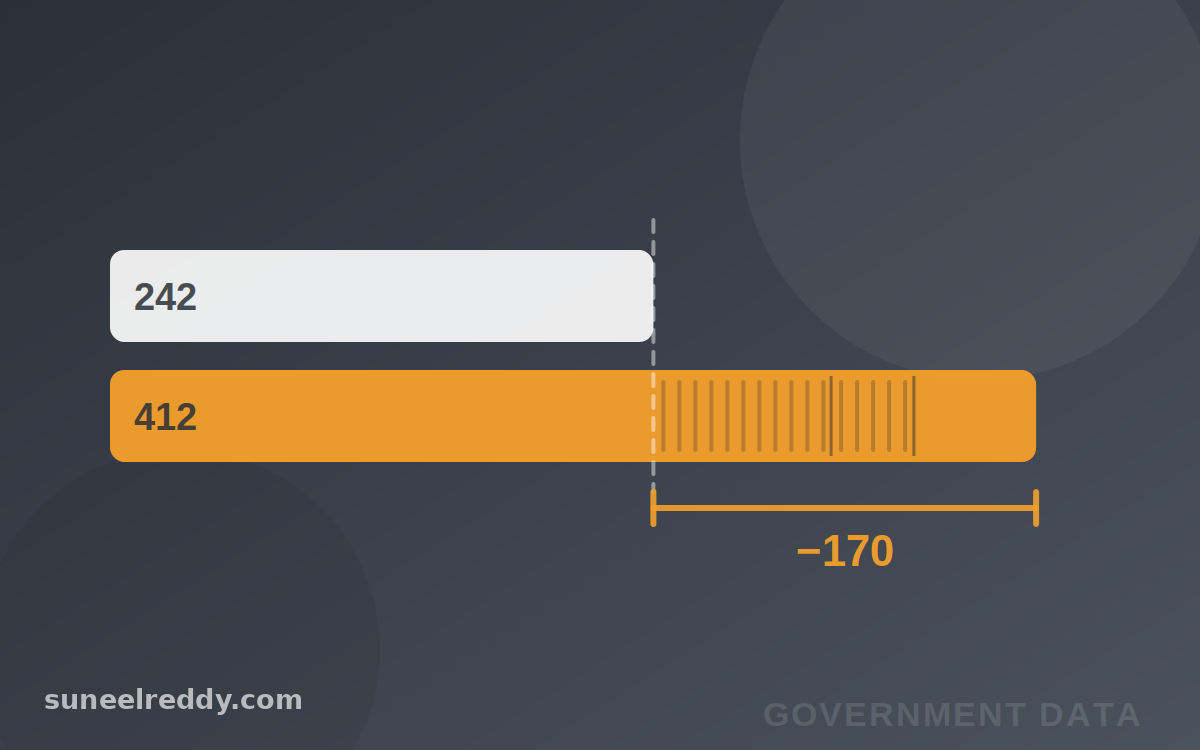
India imported $412 billion of goods in the first seven months of 2026 and exported $242 billion. The gap, $170 billion, is the number that gets quoted. It is also a number that hides two very different problems inside it.
Two-thirds of the deficit is oil and gold.
Group the trade by sector and the picture sorts itself quickly. Energy — crude oil, petroleum products and coal — runs a deficit of $79 billion. Gold, gems and jewellery add $37 billion. Together that is $116 billion, about two-thirds of the whole gap. Crude alone is 19% of everything India imports; gold, at $34 billion, is the second-largest single import line.
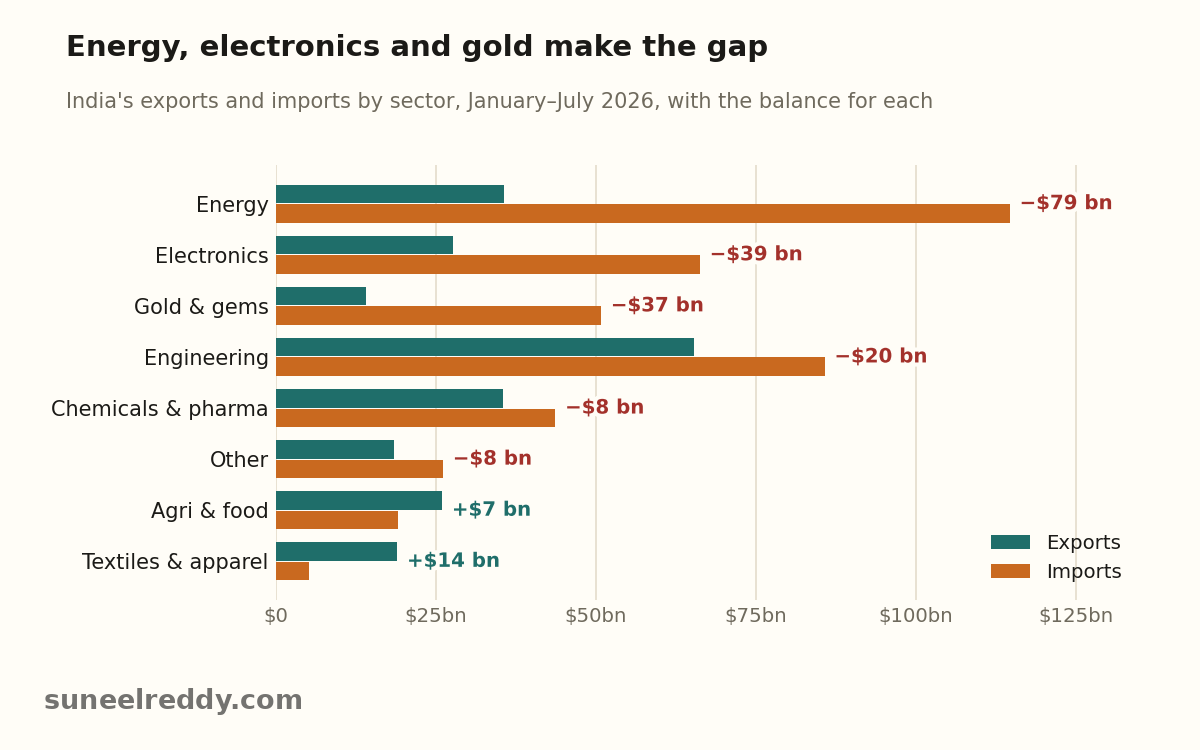
Neither is a surprise, and neither says much about Indian industry. India does not produce enough oil to run its economy, and much of the gold it buys ends up as jewellery or savings. These deficits move with global prices and household demand. They are real costs, but they are not a competitiveness problem.
Take out oil and gold, and what remains is a China deficit.
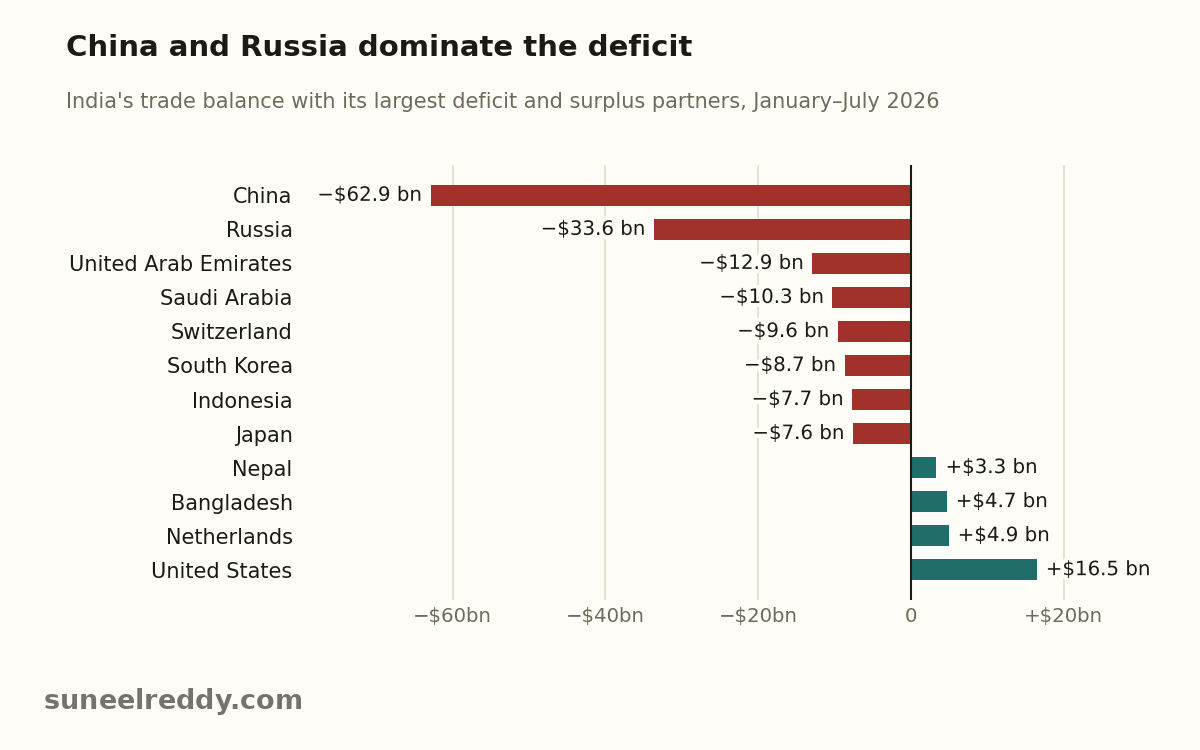
Excluding energy and gold, India's trade deficit with the entire world is $54 billion. Its deficit with China on those same goods is $63.5 billion. In other words, the surpluses India earns elsewhere on everything else offset part of its China deficit — but not all of it.
That China deficit is not commodities. It is electronics ($24.5 billion), machinery and other engineering goods ($23.4 billion) and chemicals ($11.7 billion). India sold China $10.8 billion of goods in seven months and bought $73.7 billion. China supplied 18% of all India's imports and 39% of its imported electronics — close to half if you count goods consigned through Hong Kong.
Russia is the other large deficit, and it is almost entirely oil.
India's deficit with Russia is $33.6 billion, and $32.5 billion of that is energy. Russia supplied 36.5% of India's crude over these months, ahead of Saudi Arabia and the UAE at about 13% each. It is the second-largest source of Indian imports after China, and India sold it just $2.4 billion in return.
The surpluses are smaller and more scattered.
The United States is India's largest surplus partner at $16.5 billion, followed by the Netherlands, Bangladesh and Nepal. Only two sectors are in surplus overall: textiles and apparel ($14 billion) and agriculture and food ($7 billion). Engineering, India's largest export sector, still imports more than it exports.
The two deficits need different answers.
The oil and gold gap is about prices, currency and demand. The China gap is about what India can make. India's electronics exports sit on top of large component imports: $27.8 billion of electronic components in seven months, 31% of them from China and another 14% consigned through Hong Kong. That is how assembly-led manufacturing usually begins. The test is whether the share of imported components falls over time, or whether higher exports simply pull in more imports behind them.
I have put the full import data — 84,638 commodity–country–port flows — into an interactive import atlas, with a trade-balance view that compares it against the export atlas for the same months.
If India's phone exports double, how much of that increase will show up in its imports from China?
Data: India's merchandise trade by principal commodity, country and port, January–July 2026, from the Directorate General of Commercial Intelligence and Statistics (DGCI&S) Foreign Trade Data Dissemination Portal.